
Start with the mounting catalogue
If every setting starts at the same amount, a base price with add-ons can be straightforward. If each setting already has a different price in gold, platinum and other metal groups, a per-metal table follows the catalogue more closely. Band prices then describe the additional band component.
Neither approach removes the need to check totals. During a conversion, a base price left outside full setting prices can be counted twice. Percentage adjustments and mixed metal groups also need deliberate review. Use known catalogue examples as your reference.
Choose a diamond model independently
A price by weight works when one diamond amount represents each offered weight. A rate per carat by shape works when your team maintains that rate. A shape-and-weight matrix works when the catalogue has separate amounts at each intersection. Inventory pricing works when a shopper buys a specific stock diamond.
These methods represent different promises to the shopper. A specification-based selection says which kind of diamond will be supplied. A stock selection identifies an actual stone, with its own availability, grades and certificate information. Use the method your fulfilment process supports.
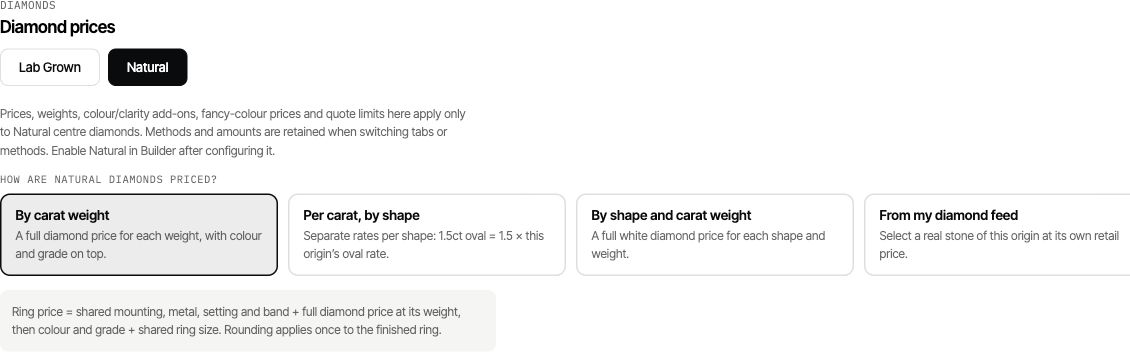
Treat Lab Grown and Natural as separate catalogues
A single origin multiplier may not match how your suppliers price shape, weight and grade combinations. Separate origin profiles let the team maintain independent diamond tables or methods while sharing the same mounting catalogue.
In Ring Facet, configure Lab Grown and Natural independently and enable only the origins that are ready to sell. A merchant can use inventory for one origin and option prices for the other. See the setup walkthrough.
Give exceptions a buying path
Large centres, rare colours and sizes outside the normal range may need human confirmation. A quote-only rule keeps that enquiry available without committing to an unreviewed payment amount. It is useful only when the request reaches a team that can fulfil it.
Decide which limits apply to a whole weight, which apply to a colour and which are missing individual prices. Then test the resulting buyer journey instead of relying on the table alone.
Maintain the prices you can explain
Keep the source spreadsheet aligned with the visible editor table and review any pasted block. Record which values are full diamond amounts, rates per carat and colour or grade add-ons. This gives the next person updating prices a clear starting point.
Before accepting orders, check the complete ring in the storefront, cart and checkout. Compare currencies as well as component arithmetic. Configure pricing in Ring Facet · Set quote-only rules.