Guide

What a ring builder actually changes.

Not "engagement" or "time on site". The concrete operational and commercial mechanisms — and the ones a configurator does not fix.

Try the live demo Read the buyer’s guide Talk it through
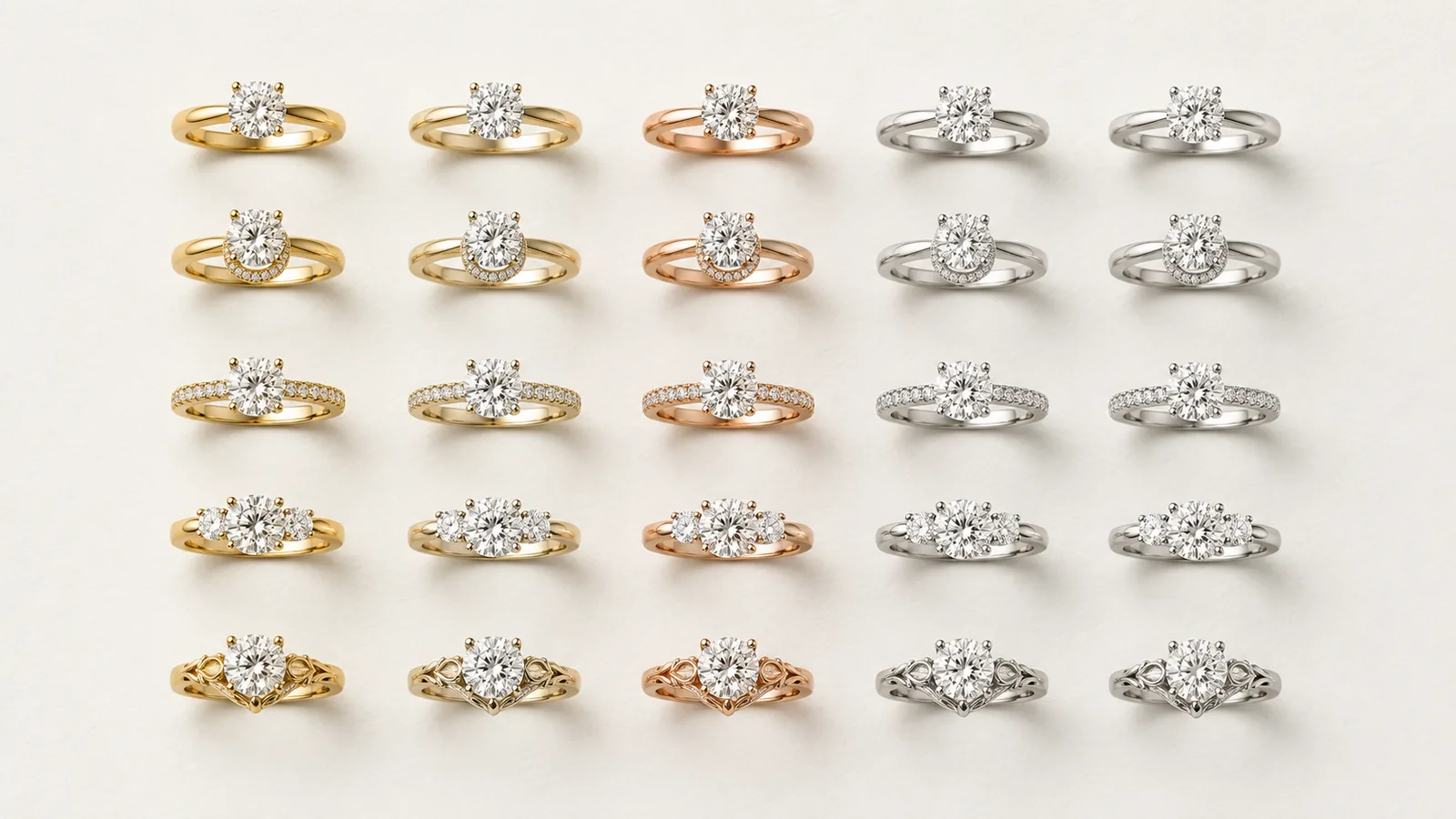
A five by five grid of engagement rings, the metal changing across the columns and the setting style down the rows

Five mechanisms

01

You merchandise a range you do not hold

A bridal retailer cannot stock every setting in every metal in every centre-stone size, and cannot photograph them either. A configurator turns 39 model files into 373 valid head, band, and shape assemblies, before metal, karat, finish, carat, colour, clarity, and size multiply that further. The stock decision and the merchandising decision stop being the same decision.
02

The expensive decision stops happening in the dark

The reason online engagement ring conversion is hard is that a customer is asked to commit thousands of pounds against flat photographs of a piece that does not exist yet. Seeing the actual relationship between a pear centre stone, a hidden halo, and a twist band — and what each choice does to the price — is the difference between an enquiry and a decision.

03

The CAD email loop collapses

The traditional custom flow is: enquiry, consultation, CAD request, render, email, revision, email, revision, quote. Each cycle costs a designer's time and days of elapsed calendar. When the customer arrives having already configured the ring, the first CAD is a confirmation rather than a first guess. Sales staff can drive the same builder at the counter and send the customer home with a link instead of a promise to email something.

04

Intent is captured in a usable shape

A contact form tells you someone is interested. A saved build tells you they want an oval, three-stone, 18kt yellow, 1.5ct, G, VS1, size 6, engraved. That is a qualified lead you can quote from, follow up on, and reopen months later when they come back.

05

Price is answered before the customer has to ask

"Contact for price" filters out the customers who were not going to email you, which is most of them. A live total that moves as options change also does merchandising work: it shows what a smaller centre stone in a better setting buys, which is a better conversation than a single number at the end.

Every angle, not one photograph

A flat product shot asks a customer to imagine the other 359 degrees. Being able to turn the ring is most of the difference between an enquiry that needs a consultation to progress and a decision the customer can reach on their own.

What a configurator does not fix

It will not price your rings for you

The pricing rules are yours to define. A configurator makes your pricing consistent and enforceable; it does not make it correct.

It will not replace the consultation

For high-value bespoke work, the builder's job is to make the consultation shorter and better informed, not to remove it. Quote mode exists for exactly this reason.

It will not fix a broken handoff

If configured selections do not reach your cart, your quote inbox, and your bench in a readable form, a configurator just adds a beautiful dead end to your site. That handoff is most of the engineering.

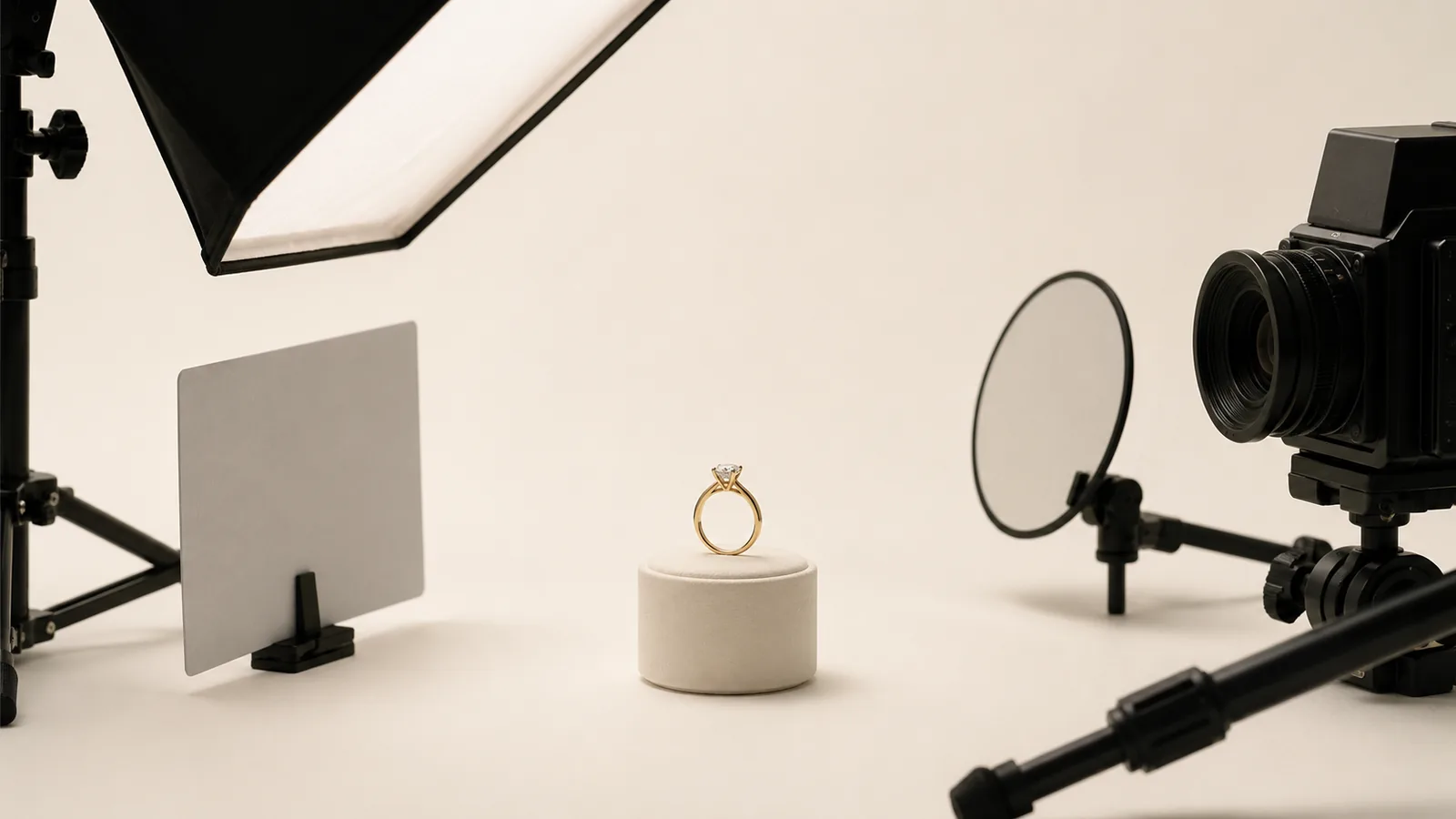
A single engagement ring on a stand surrounded by a softbox, a grey card, a reflector and a medium format camera
The cost side

What it replaces.

Per-variant product photography, the render requests that a design team fields instead of designing, and the enquiries that go unanswered because the answer required a person. One model covers every metal, finish, size, and stone quality it can be shown in — which is the whole economic argument for rendering over shooting.

Next

Decide with the thing in front of you.

Open the demo on a phone. That is the device most of your customers will use.